
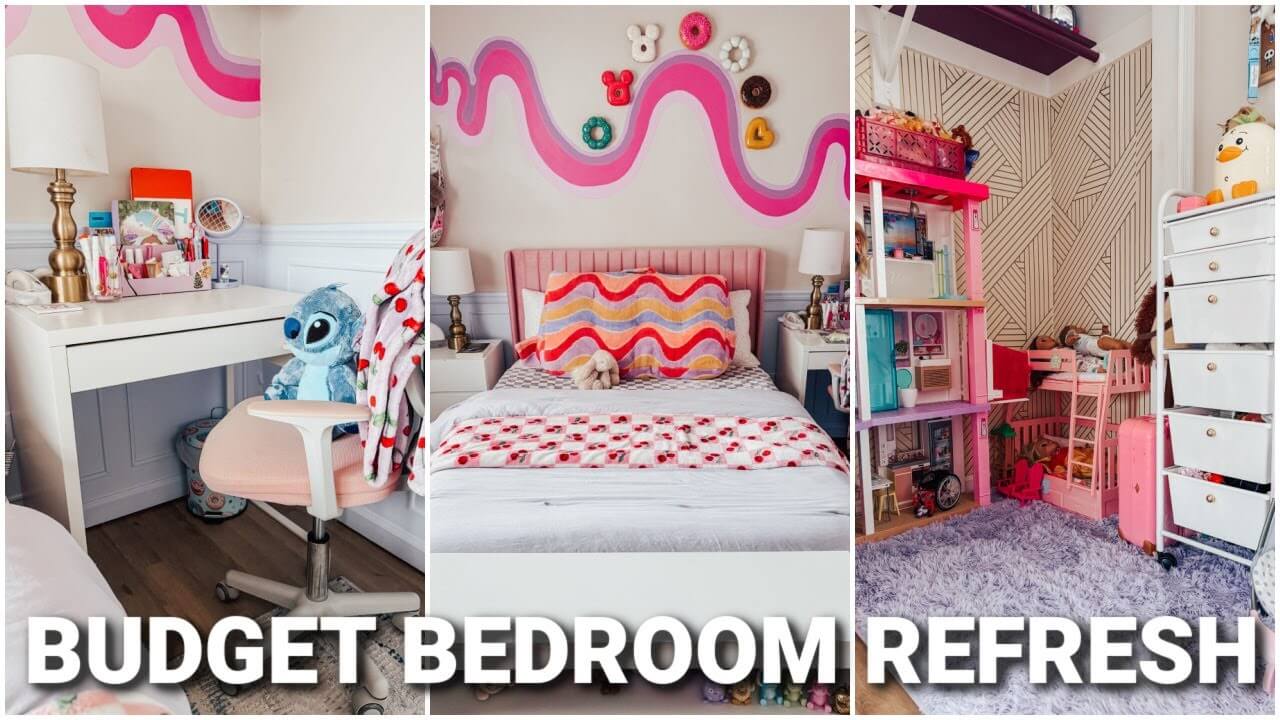
Decorating a small bedroom on a budget sounds simple until you’re standing in a 10×10 box, wondering why everything you try makes it feel smaller and more cluttered.
I’ve been there. Multiple times.
How to Decorate a Small Bedroom on a Budget Without Making It Feel Like a Storage Unit
The real problem isn’t money
Most people think the challenge is budget.
It’s not.
It’s decisions. Too many things. Wrong scale. Furniture pushed flat against every wall. No clear focal point. A room can have twenty cheap things and still feel worse than a room with five intentional ones.
I spent way too much money in my first small rental bedroom buying random things that looked good on Pinterest and terrible in real life. Chunky nightstands. A rug that was too small. Wall art that I taped up crooked and left there for six months out of laziness.
The budget thing is fixable. The decision-making thing — that takes a minute to figure out.
The first thing I do in any new small bedroom
Before I buy anything. Before I move a single piece of furniture.
I sit in the room for five minutes.
Sounds dumb. It works.
I look at where the natural light comes from. I notice what my eye goes to first when I walk in. I figure out where the dead zones are — corners that feel awkward, walls that just sit there doing nothing.
That five minutes has saved me from some genuinely bad purchases.
In my current place, I noticed the window was the best thing in the room. Small, but it faced east. Morning light came straight through. So I built the whole layout around that — bed positioned so I woke up facing it, no furniture blocking it, a small trailing plant on the sill.
Didn’t cost anything. Changed everything.
Furniture: the “less but better” rule
This was hard for me to accept.
I kept thinking I needed more furniture to make a small bedroom feel complete. A desk. A full dresser. Two nightstands. A bench at the foot of the bed.
Wrong.
In a small room, more furniture = less breathing room = instant claustrophobia.
What I do now: pick two or three anchor pieces and make them count. A bed frame with under-bed storage. One nightstand instead of two. A single floating shelf instead of a whole bookcase.
Under-bed storage is the most underused resource in a small bedroom. I have three flat bins under mine — seasonal clothes, extra bedding, things I don’t need daily. That storage freed up my closet so much that I didn’t need a separate dresser at all.
If you’re building out a small bedroom storage system on a budget, start there before buying anything else.
What textiles actually do to a space
This is where budget decorating either clicks or completely falls apart.
Your bed takes up most of the room. So whatever is on that bed IS the room.
I used to just throw whatever sheets I had on there and wonder why the space felt sad. Then one day I bought a single linen-look duvet cover — cream, nothing fancy, around $30 — and added two textured throw pillows.
The whole room looked intentional overnight. Same furniture. Same walls. Same everything.
The trick is texture over pattern. A waffle-weave blanket draped at the foot of the bed. A chunky knit throw over a chair. Pillow covers in different fabrics but the same color family.
Patterns fight each other in small spaces. Textures layer quietly.
Also — a rug. Please don’t skip the rug.
But size it correctly. A rug that’s too small looks like a tiny island in the middle of your floor. It somehow makes the room feel smaller than having no rug at all. I made this mistake twice. The rug should extend at least a foot or two beyond both sides of the bed. If you can’t afford the right size, a runner on one side only looks far better than an undersized square centered in the room.
Lighting is where most people leave money on the table
Overhead lighting in rental bedrooms is almost always terrible.
That one flat ceiling fixture with a lukewarm bulb? It makes every room look like a waiting room.
I stopped using it completely.
Two small lamps — one on the nightstand, one in the corner on the floor pointing upward — transformed the mood of my bedroom entirely. Warm bulbs. Nothing above 2700K color temperature. The room went from harsh to cozy in about forty minutes and maybe $40.
Floor lamps that arc over a chair or the corner of the bed are especially good in small spaces because they give height without taking up surface area.
If your nightstand is too small for a lamp, clip-on reading lights that attach to the headboard or the wall work just as well — and for renter-friendly bedroom lighting on a tight budget, they’re one of the best swaps you can make.
The gallery wall moment — and why I almost ruined mine
I wanted a gallery wall above my bed.
So I bought five frames, printed some photos, measured nothing, and stuck them up with Command strips in about twenty minutes.
It looked unhinged.
Frames at different heights. Different gaps between them. No visual logic.
I took them all down, laid them on the floor first, figured out the arrangement, then measured and transferred it to the wall. Second attempt looked like something out of a magazine.
The lesson: gallery walls aren’t hard, they just require fifteen minutes of planning on the floor before you touch the wall. That’s it. No special skill. Just patience.
One more thing — odd numbers work better than even. Three frames. Five frames. Not four. Something about even groupings looks stiff in casual spaces.
Color without painting a single wall
Landlords love beige. I’ve lived in six places. Five of them were beige.
You can shift the feel of a beige bedroom completely without touching the paint.
Color through textiles — I already covered this. But also:
A dark bookcase or storage unit against a light wall creates instant contrast. A deep-toned throw draped over a chair anchors the room. Even swapping out a lamp shade for one in a warm terracotta or forest green adds enough color to feel intentional without overwhelming the space.
For budget bedroom color ideas that don’t require painting, this layering approach is genuinely the most effective I’ve found. You’re not adding color to the room — you’re adding color to the things inside the room, which is easier to adjust, cheaper to change, and totally reversible.
The corner problem
Every small bedroom has at least one dead corner.
You know the one. It’s where you put things you don’t know where to put. A laundry bag. That chair you haven’t decided on yet. Boxes you never fully unpacked.
A corner can be one of the most stylish parts of a small room if you treat it deliberately.
A tall plant. A floor lamp. A small ladder shelf. One of these in a corner turns dead space into a vignette. Suddenly that corner looks curated instead of forgotten.
I put a tall dried pampas grass stem in an inexpensive vase in the corner behind my bedroom door. Costs nothing to maintain. Looks like I tried really hard when I didn’t.
Thrift stores changed how I think about budget decorating
I used to think thrift store furniture meant ugly furniture.
I was wrong.
A solid wood nightstand with ugly hardware is a $15 buy and a $4 hardware swap away from looking expensive. A boring frame gets spray painted matte black. A plain lamp gets a new shade.
The items that are hardest to find secondhand — and worth buying new — are mattresses, rugs, and anything fabric-upholstered. Everything else? I’d check Facebook Marketplace and thrift stores first.
For building out a full budget small bedroom makeover, I’d estimate you can do something genuinely good for $100–150 if half of it comes from secondhand sources.
Mistakes I kept repeating (until I didn’t)
Buying furniture first, vibe second. I bought a wooden bed frame before I knew what aesthetic I wanted. It fought everything else in the room for two years.
Ignoring vertical space. Walls above eye level in a small bedroom are prime real estate. High shelves, art hung slightly higher than feels natural, pendant lights — all of these draw the eye up and make the ceiling feel farther away.
Over-accessorizing the dresser or nightstand. Five things on a nightstand looks like a flea market. One or two things, placed with intention, looks like a hotel.
Buying matching sets. Complete bedroom “sets” that include the bed, nightstand, and dresser in the exact same finish look dated. Mixing tones — light wood with matte black hardware, or a white bed frame with a walnut dresser — looks curated and current.
Frequently Asked Questions
What’s the single biggest impact change you can make in a small bedroom for under $50?
New bedding or pillow covers in a cohesive color. The bed is the visual anchor of the room — upgrade that first and everything else looks more intentional by association.
How do you make a small bedroom look bigger without knocking down walls?
Hang curtains close to the ceiling, use mirrors strategically, keep the floor as clear as possible, and choose furniture with legs (so you can see floor underneath — it reads as more open space).
Is it worth buying a bed frame with storage drawers on a tight budget?
Yes, absolutely. It eliminates the need for a separate dresser and under-bed storage doubles your usable space. It’s one of the best single investments in a small bedroom.
My walls are ugly but I can’t paint. What do I do?
Hang things. Art, a tapestry, a large mirror, floating shelves with objects on them. The more of the wall you cover intentionally, the less visible the wall itself is. Just use proper Command strips and follow the weight limits.
Small bedrooms don’t need more stuff. They need the right stuff, in the right place, with a little intention behind it. Once that clicks, the budget part almost solves itself.

Scott is the creator of TheHomeDelight, where he shares simple, budget-friendly home decor ideas that actually work. From small space makeovers to cozy styling tips, he helps you create a home you love—without overspending