
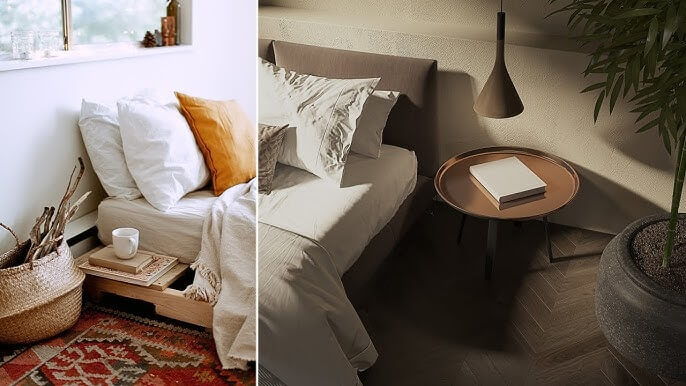
Your deposit is on the line, your walls are bare, and your bedroom still looks like a hospital waiting room. You don’t need a drill, paint, or your landlord’s blessing to fix that.
This guide covers how to decorate a small bedroom without drilling — with real, specific ideas you can start this weekend, most under $50.
Quick Reference: No-Drill Decor by Budget
| Solution | Approx. Cost | Difficulty | Impact |
|---|---|---|---|
| Swap light bulbs (warm 2700K) | $8–$12 | ⭐ Easy | ⭐⭐⭐⭐⭐ High |
| Layer bedding + throw | $25–$60 | ⭐ Easy | ⭐⭐⭐⭐⭐ High |
| Command strip gallery wall | $15–$40 | ⭐⭐ Medium | ⭐⭐⭐⭐ High |
| Tension rod curtains (hung high) | $20–$45 | ⭐ Easy | ⭐⭐⭐⭐⭐ High |
| Leaning floor mirror | $30–$80 | ⭐ Easy | ⭐⭐⭐⭐ High |
| Peel-and-stick wallpaper (one wall) | $30–$80 | ⭐⭐ Medium | ⭐⭐⭐⭐⭐ High |
| Area rug (oversized) | $35–$120 | ⭐ Easy | ⭐⭐⭐⭐ High |
| Plug-in wall sconces | $25–$60 | ⭐⭐ Medium | ⭐⭐⭐⭐ High |
| Freestanding headboard (leaning) | $50–$150 | ⭐ Easy | ⭐⭐⭐⭐⭐ High |
| Freestanding ladder shelf (styled) | $40–$90 | ⭐ Easy | ⭐⭐⭐⭐ High |
Why This Problem Is So Much Bigger Than People Admit:
Most renter decor advice is either vague (“add some plants!”) or ignores the core fear entirely: losing your security deposit. With average deposits sitting at one to two months’ rent, that’s a real financial risk. So renters default to doing nothing. The bedroom stays blank, cold, and uninspired for the entire lease term.
The good news is that the no-drill product market has genuinely exploded since 2022. 3M Command strips now hold up to 16 lbs per pair. Peel-and-stick wallpaper from brands like Tempaper removes without pulling paint. Tension rods, leaning mirrors, and plug-in sconces have made the “you’re just renting” compromise completely obsolete. You no longer have to choose between aesthetics and your deposit.
How to Decorate a Small Bedroom Without Drilling
Fix Your Lighting Before You Buy Anything Else
This is the most underestimated, cheapest, fastest upgrade on this entire list — and almost nobody talks about it first. The overhead fixture in most rental apartments casts a cool, harsh light that makes every room feel clinical. One bulb swap changes the entire mood.
Replace whatever’s currently in your fixture with a warm white LED bulb rated at 2700K–3000K. This single change makes your walls look warmer, your bedding look cozier, and your whole room feel intentional. Cost: about $8. Time: 30 seconds.
Then layer your light sources. Floor lamps, bedside lamps, and plug-in wall sconces all create depth that a single overhead bulb never will. For wall sconces without drilling, look for plug-in versions on Amazon — they look identical to hardwired fixtures, and you can run the cord along the wall inside an adhesive cord cover strip (also no-drill, paintable plastic). The result looks like a renovated space. It is not.
If you want to go further, Govee LED strip lights adhere behind a headboard or under a bed frame using their own adhesive backing, are app-controlled, and cost around $20–$35. These are wildly popular on TikTok for good reason — they transform a budget bedroom into something that photographs beautifully.
✨ The Curtain Trick That Makes Every Small Room Look Bigger
Hanging curtains is one of the most transformative things you can do in a rented bedroom, and you do not need a single drill hole to do it. Use a tension rod that wedges inside the window frame using spring pressure — Umbra’s Cappa rod is clean and modern, available at Target for around $20.
Here’s the detail most guides skip: where you hang the rod matters far more than what curtains you buy. Hang your rod as close to the ceiling as possible, not at the top of the window frame. Let the curtains drop all the way to the floor. This visual trick makes your ceiling appear a foot taller and your window appear twice as grand. It’s the single most-used trick in professional interior design, and it costs nothing extra.
Pair a sheer linen panel (lets in soft light during the day) with a blackout layer (full darkness for sleep) on the same rod. This combination is both functional and layered-looking. IKEA’s HILJA and MAJGULL panels are affordable, widely available, and work beautifully together.
If your windows have metal frames, magnetic curtain rods click on with zero hardware whatsoever — no tension, no strips, no installation at all.
Build a Gallery Wall With Zero Nail Holes
A gallery wall is one of the most visually rich things you can add to a small bedroom, and with 3M Command Picture Hanging Strips, you can build one that holds real framed art — up to 16 lbs per pair — without touching your paint.
The key to removal is patience. Pull each strip tab straight down slowly, never at an angle. Done correctly, the adhesive releases cleanly without lifting paint. This is not a guess — it’s the method explicitly tested and guaranteed by 3M.
For art on a budget, Society6, Desenio, and Posterlounge all offer downloadable prints that cost $5–$15 when printed at a local print shop. Mix sizes: one large anchor print (16×20″), two medium frames (8×10″), and a few small ones (4×6″) creates an organic gallery layout that looks curated, not random. Lay the arrangement on your floor first, then transfer it to the wall.
If you want a completely commitment-free option, lean your largest art piece against the wall on top of a dresser or shelf. This is actively done in high-end interior design — it’s not a workaround, it’s a style choice.
No Headboard? Here’s What Your Bedroom Is Actually Missing
The bed is the visual centerpiece of every bedroom. Without a headboard, the whole space looks unfinished — no matter how nice everything else is. A leaning headboard solves this without any attachment to the wall or bed frame. You push the bed against it and gravity does the rest.
Wayfair sells several “leaning panel headboards” starting around $80–$150. For a DIY option that costs under $40, buy a piece of plywood cut to your bed width, wrap it in 2″ foam batting, pull fabric over it, and staple the back. It leans, it holds, and it looks intentional. Search “DIY leaning upholstered headboard” on YouTube — tutorials with 100k+ views make it genuinely approachable.
The height matters: a headboard should sit 24–28″ above your mattress to feel proportional. Go taller if your ceilings are high.
Use Peel-and-Stick Wallpaper on One Wall Only
Full-room wallpaper projects can go wrong and feel overwhelming. One accent wall — specifically the wall your bed is against — changes the entire personality of your room without covering every surface.
Brands like Tempaper (grasscloth and marble patterns look genuinely expensive), Chasing Paper (bold artist collaborations), and HAOKHOME on Amazon (around $18–$25 per roll) all offer fully removable peel-and-stick options. When you move out, peel it off at a 45-degree angle, slowly. Most walls come out clean.
Application tips that matter: clean the wall with a slightly damp cloth and let it dry completely before applying. Use a credit card or squeegee to push bubbles outward from the center. Slightly overlap seams so gaps don’t appear over time. One roll covers roughly 18 square feet, so measure your wall before ordering.
🛋️ From Dorm Room to Dream Room: The Floor-Level Strategy
This is a content gap almost every competing article misses entirely: what you do at floor level defines whether a small bedroom feels designed or accidental.
An area rug is non-negotiable. Without one, even a beautifully decorated bedroom feels cold and unanchored. The most common mistake renters make is buying a rug that’s too small — it ends up looking like a bath mat. In a bedroom, the rug should extend at least 18–24 inches beyond each side of your bed frame. If that feels like a lot, it’s because it is — and that’s exactly why it works.
A non-slip rug pad underneath does double duty: it protects the floor (important for keeping your deposit) and stops the rug from shifting. Ruggable’s washable rugs are especially popular with renters since you can throw them in the washing machine. IKEA’s Stockholm collection and Target’s Studio McGee line both offer quality options at accessible prices.
The layered rug trend — a flat jute base with a smaller printed rug on top — adds dimension and looks intentional in even the most basic room. It’s also very Pinterest-saveable.
Add a Leaning Mirror to Double Your Visual Space
A large floor mirror leaning against a wall requires zero attachment, zero hardware, and zero permission. It also makes a small bedroom feel dramatically larger by reflecting natural light and adding depth to what would otherwise be a flat surface.
IKEA’s HOVET and NASSEDAL mirrors are designed to lean and are reliably affordable. For under $60, they deliver a significantly elevated look. Position the mirror opposite your window to maximize light bouncing — this is especially valuable in bedrooms with limited natural light.
Over-door mirrors (around $25–$45 on Amazon) are an excellent alternative if floor space is tight. They hook over any standard door, require no hardware, and free up your wall entirely.
Style a Freestanding Shelf (the Right Way)
Freestanding shelves look cheap when they’re empty and curated when they’re styled. The difference is intentionality. A basic IKEA KALLAX cube unit, a Target Brightroom modular shelf, or an Amazon ladder shelf can look like a boutique-hotel vignette if you follow one simple rule: style in groups of three using varied heights.
One tall item (a stack of books, a tall vase), one medium item (a small plant, a candle), and one small item (a small sculpture, a photo) creates visual rhythm. Add texture variation — something woven, something ceramic, something leafy. Leave some open space deliberately. Intentional negative space signals a styled shelf; filling every gap signals clutter.
One safety note most guides skip: for tall freestanding bookcases, anti-tip furniture straps are a good idea. Most leases consider these a safety installation, not damage. Confirm with your landlord before installing, but they generally approve.
Pro Tips That Separate Okay Bedrooms from Stunning Ones:
The 60/30/10 color rule is worth applying here. Choose one dominant neutral (60% of the room — think walls, bedding, rug), one secondary tone (30% — curtains, furniture, larger accessories), and one accent color (10% — throw pillows, a plant pot, a small piece of art). This framework prevents the chaotic “I just added everything I liked” look that plagues most small bedroom attempts.
Scent is consistently skipped by decor guides, but it’s one of the most powerful environmental cues your brain uses to evaluate a space. A reed diffuser ($15–$25, lasts months) in cedarwood, lavender, or warm vanilla shifts how your bedroom feels the moment you walk in. It makes a room feel cared for in a way that’s impossible to replicate visually.
Also, before you spend a single dollar — rearrange your furniture first. Most renters default to pushing everything against the walls, which counterintuitively makes small rooms feel smaller. “Floating” your bed a few inches from the wall and pulling furniture slightly away from corners creates visual breathing room and makes the layout look designed rather than deposited.
Common Mistakes That Kill the Whole Effect:
The number one mistake is buying things before addressing the lighting. No amount of carefully chosen art or beautiful bedding overcomes a harsh, cool-white overhead bulb. Fix the light first. Always.
The second most common mistake is buying a rug that’s too small. A 5×7″ rug in a bedroom with a queen bed looks like an afterthought. Go bigger, or don’t bother.
Renters also frequently over-decorate in an attempt to “cover” what they don’t like about the space. More objects do not fix a room — editing does. A curated, slightly minimal approach always photographs better and feels more serene than a room where every surface is filled.
Finally, don’t remove Command strips at an angle or in a rush. Pulling them sideways or yanking quickly is exactly how you pull paint. Pull the tab straight down, slowly, parallel to the wall. This is the entire technique — and it works every time when done correctly.
Quick Weekend Transformations (Pinterest-Style Wins):
If you have one hour: swap your light bulb to 2700K, put a tray on your dresser and group your items on it, and make your bed with a folded throw at the foot. Cost: $8–$20. Result: your room looks styled.
If you have one afternoon: hang tension rod curtains as high as possible, add a leaning floor mirror, and put a large area rug under your bed. Cost: $75–$150. Result: your room looks like a magazine spread.
If you have one weekend: peel-and-stick wallpaper on your headboard wall, a freestanding or DIY leaning headboard, and a Command strip gallery wall. Cost: $80–$200. Result: guests will ask if you renovated.
Conclusion:
You don’t need to own your walls to make your bedroom feel like yours. The tools, products, and techniques available to renters right now are genuinely excellent — far beyond the “hang a poster with a thumbtack” era. Start with lighting and bedding this weekend. Add one layer at a time. The room you want is closer and cheaper than you think.
Frequently Asked Questions:
Can Command strips really hold heavy frames without damaging walls? Yes — when applied to a clean, dry, fully painted surface and removed correctly (pull the tab straight down, slowly), 3M Command Picture Hanging Strips reliably hold up to 16 lbs per pair without damaging paint. Always check the weight rating on the package for your specific frame.
What’s the best no-drill curtain option for a rental apartment? Tension rods are the most reliable. They wedge inside the window frame with spring pressure and hold most curtain weights. For metal window frames, magnetic curtain rods are even simpler — they click on with no installation at all.
Will peel-and-stick wallpaper actually come off cleanly? From reputable brands (Tempaper, Chasing Paper, NuWallpaper), yes — on standard painted drywall. The key is applying it to a fully dry, clean surface and removing it slowly at a 45-degree angle. Do a small test patch in a hidden corner first if you’re nervous about your specific wall surface.
How do I make my small rented bedroom feel bigger without renovating? Three things move the needle most: hang curtains from ceiling height to floor, place a large leaning mirror opposite your window, and buy a rug that extends well beyond your bed frame on all sides. These three changes together create a dramatically more spacious feel with zero permanent changes.
Is it worth decorating a bedroom I’m only renting for a year? Absolutely — and most of these items travel with you. Your rug, mirror, curtains, bedding, shelf, and art all move to your next place. You’re not investing in the apartment; you’re investing in your own quality of life and a collection of reusable, portable pieces.

Scott is the creator of TheHomeDelight, where he shares simple, budget-friendly home decor ideas that actually work. From small space makeovers to cozy styling tips, he helps you create a home you love—without overspending